Planning a big trip with points should feel exciting. But it often turns confusing fast. You compare routes, check different airlines, and still feel unsure if you are getting the best value.
The US travel rewards credit card market was valued at $75.9B in 2024. More people are earning points than ever, yet many still feel stuck when it comes to using them well.

At some point, you may wonder if there is a simpler way to structure everything. Frequent flyer mile value can vary by up to 400% depending on the program and route. Small decisions can quietly change how much you get from your points.
This is where multi-city award trips help. They give you a clearer way to plan, connect destinations, and make better use of what you already have. In this blog, you will learn simple steps to book multi-city award trips with more clarity, less confusion, and better results.
What Actually Matters When Booking:
- Structure drives value: Your route direction and trip design decide outcomes before you even search flights.
- Availability controls decisions: Flexible dates help you access better award seats and avoid forcing poor redemptions.
- Not all segments are equal: Long-haul premium flights carry most of your trip’s value, so prioritize them first.
- Program choice changes everything: The same flight can cost far fewer points depending on where you book it.
- Booking format affects risk: A single ticket improves protection, while split tickets increase flexibility but need careful planning.
What Are Multi-City Award Trips and Why They Matter
Multi-city award trips let you combine multiple destinations into one structured booking using points. Instead of separate tickets, you connect flights into a single plan. This improves how your points are used and how your trip flows. Using a points optimization tool can make this structure easier to plan, especially when comparing multiple routing options.
You get more destinations without increasing complexity. In many cases, you spend the same or slightly more points, but gain better overall value.
Here is what makes them effective:
- Cover Multiple Destinations: Visit more cities within one booking instead of splitting tickets.
- Reduce Backtracking: Move in one direction and avoid unnecessary repeat routes.
- Improve Redemption Value: Allocate more points to long-haul segments where value is higher.
- Simplify Trip Management: Manage fewer bookings and reduce coordination issues.
- Turn Layovers Into Stops: Convert connection cities into planned experiences.
Types of Multi-City Award Trips You Should Know
The structure you choose shapes both flexibility and cost. Each format fits a different type of trip and planning style.
Here are the three main types:
- Stopover-Based Trips: Stay in a hub city for a few days without a major increase in points. Use when routes naturally pass through major transit hubs.
- Open-Jaw Trips: Fly into one city and return from another. Use when traveling between cities by land.
- True Multi-City Itineraries: Chain multiple flights in sequence. Use for long trips across regions with a clear direction.
Step-by-Step Process to Book Multi-City Award Trips (Core Framework)
Booking multi-city award trips depends more on execution than tools. If you fix routes and dates too early, you limit better options. A structured process helps you build efficient itineraries and avoid wasted points.
Follow these steps in order:
1. Plan Route Direction First (Avoid Backtracking)
Start by mapping a clean geographic path across your destinations.
- Move In One Direction: Progress across regions without looping back.
- Avoid Duplicate Routes: Do not revisit the same city unless necessary.
- Keep Connections Logical: Choose hubs that align naturally with your route.
This is where Flightpoints helps by showing better route combinations early, so you avoid inefficient structures before searching flights.
2. Search Award Availability Before Fixing Dates
Award seat availability should guide your timeline.
- Check Award Seats First: Use airline systems and partner availability views.
- Stay Date Flexible: Adjust within a 3 to 5 day range.
- Focus On Saver Seats: Prioritize lower mileage options when possible.
Setting up award seat alerts can help you catch availability changes without manually checking the same routes repeatedly.
3. Lock Hardest Long-Haul Segments First
Long-haul flights define your itinerary value.
- Secure Premium Routes Early: Book intercontinental flights first.
- Prioritize Business Class: These segments offer higher value per point.
- Build Around Anchors: Add shorter legs after securing key flights.\
4. Build Itinerary Leg-By-Leg
Break the journey into manageable segments.
| Segment Example | Purpose |
| New York To London | Long-Haul Segment |
| London To Paris | Short-Haul Connection |
| Paris To Dubai | Long-Haul Extension |
| Dubai To Singapore | Regional Continuation |
- Search Each Segment Separately: Identify hidden availability across routes.
- Combine After Confirmation: Merge segments into a single itinerary if possible.
A points itinerary planner can help you visualize each segment clearly before combining them into a final booking.
5. Compare Partner Programs, Not Just Airlines
Program choice affects mileage cost significantly.
- Check Partner Pricing: Compare mileage across airline alliances.
- Avoid Direct Booking Bias: Do not assume the operating airline is cheapest.
- Look For Better Conversions: Use programs with favorable redemption rates.
6. Use Stopovers To Increase Value
Stopovers can add destinations without large point increases.
- Select Strategic Cities: Choose hubs that fit your route.
- Extend Layovers Meaningfully: Stay long enough to explore.
- Avoid Overloading Itinerary: Keep the route efficient and clear.
7. Decide Booking Structure (Single Vs Split Tickets)
Your booking format impacts both cost and risk.
| Option | When To Use |
| Single Ticket | For Simpler Travel And Protection |
| Split Tickets | For Better Pricing Across Programs |
- Use Single Ticket For Protection: Delays and baggage are easier to manage.
- Use Split Tickets For Flexibility: Combine programs when needed.
How to Maximize Value in Multi-City Award Trips: Key Tips
Booking gets you the itinerary. Optimization decides how much value you extract from it. Small changes in program choice, routing, and structure can significantly reduce the points you spend.
Portal redemptions often return around 1 cent per point. Transferring to partner programs can deliver 2 to 20 or more cents per point depending on the route and cabin.
Focus on these value levers:
- Choose The Right Redemption Path: Compare transfer options before booking. A single switch in the program can reduce mileage by thousands of points.
- Prioritize Long-Haul Value: Allocate points to intercontinental flights where premium cabins offer higher returns per point.
- Control Stopover Placement: Add stopovers only when they extend value, not when they complicate routing.
- Use Mixed Booking Strategy: Combine miles for expensive segments and cash for cheaper regional routes.
- Track Pricing Differences Across Programs: The same seat can vary significantly in cost depending on the loyalty program used.
Flightpoints helps you compare these pricing differences quickly, so you can choose the most efficient redemption path without manual checks.
High-Impact Optimization Strategies for Booking
Most value is gained or lost at the decision stage, not during booking. You are choosing between multiple valid options, but only one gives the best return.
Apply these strategies consistently:
- Book Through Partner Programs: Access lower mileage pricing for the same flights by booking through airline partners instead of the operating carrier.
- Use Miles For Long-Haul, Cash For Short-Haul: Reserve points for expensive international routes and pay cash for low-cost regional flights.
- Add Stopovers Strategically: Extend layovers into multi-day stops only when they fit naturally into your route.
- Use Positioning Flights Carefully: Fly to a better departure city if it unlocks stronger award availability, but include buffer time.
- Look For Fixed Award Charts: Identify programs that offer stable pricing and known high-value routes. A points travel discovery tool can help you identify these high-value routes faster across multiple destinations.
When Multi-City Award Trips Are Better Than One-Way Bookings
Multi-city award trips are not always the best option. The right choice depends on route complexity, distance, and how well segments connect under one structure.
Use these criteria to guide your decision:
| Factor | Multi-City Works Better | One-Way Works Better |
| Route Length | Long-haul, multi-region | Short, regional |
| Structure | Connected itinerary | Independent segments |
| Value | Higher in premium cabins | Limited in economy |
| Flexibility | Lower | Higher |
When Multi-City Award Trips Work Best
Use this structure when your trip benefits from continuity and value concentration.
- Long-Haul Routes: Combine continents into one structured itinerary with fewer points wasted.
- Multi-Region Travel: Connect multiple destinations efficiently without separate bookings.
- Premium Cabin Bookings: Maximize value when booking business or first class.
- Family Or Group Itineraries: Keep everyone on the same booking for simpler coordination.
When One-Way Bookings Make More Sense
In some cases, splitting bookings gives you better flexibility and control.
- Short Regional Routes: Use budget carriers or low-cost cash fares instead of points.
- Low-Cost Carrier Segments: Avoid spending miles where cash pricing is already low.
- Fragmented Availability: Book separate segments when award seats do not align.
- Highly Flexible Plans: Adjust routes and dates without being tied to one itinerary.
Risks and Mistakes That Break Multi-City Award Trips
Most failures happen after planning. A strong itinerary can still break if execution details are ignored. These mistakes increase cost, risk, and operational issues during travel.
Watch for these common breakdown points:
Common Mistakes to Avoid in Multi-City Award Trips
Avoid these errors to keep your itinerary stable and efficient:
- Booking Based On Ideal Dates: Searching fixed dates instead of availability reduces your chances of finding optimal award seats.
- Ignoring Partner Program Pricing: Booking through the wrong program can increase mileage costs significantly.
- Tight Layovers Across Separate Tickets: Missed connections are not protected when bookings are split.
- Overloading The Itinerary: Too many stops can reduce efficiency and increase travel fatigue.
- Skipping Baggage And Transit Checks: Different airlines and countries have varying rules that can disrupt your trip.
Advanced Tactics for Multi-City Award Trips
Once your basics are set, a few advanced moves can improve outcomes further. These are not required for every trip, but they help when availability is limited or pricing varies across programs.
You are refining decisions, not rebuilding the itinerary. These tactics help you adjust around constraints and extract better value from the same routes.
Use these approaches selectively:
- Expand Program Options: Check multiple alliance partners when direct options are limited.
- Adjust Entry Points: Shift departure or arrival cities to access better award space.
- Control Cabin Allocation: Use premium cabins where value is highest and adjust other segments.
- Track Availability Changes: Recheck routes as airlines release or adjust award inventory.
- Respond To Schedule Changes: Use airline changes to modify routes without additional cost.
At this stage, Flightpoints helps you reassess routes and programs faster, so you can adjust decisions without starting from scratch.
Advanced Booking Techniques To Save Points in Multi-City Trips
These techniques help you improve an existing plan without increasing complexity. You are working within constraints while improving value and flexibility.
Apply these when needed:
- Combine Alliances When Needed: Use separate bookings across alliances to access routes that do not connect under one program.
- Use Positioning Flights With Buffer Time: Add a short flight to reach a better departure city, while allowing enough time between tickets.
- Mix Cabins Strategically: Book premium cabins on long-haul legs and economy on shorter segments to balance value and cost.
- Monitor Award Release Windows: Check for new seat releases closer to departure or at standard release timelines. Using award seat notifications ensures you do not miss newly released inventory on high-demand routes.
- Use Schedule Changes To Improve Bookings: Modify flights when airlines adjust timings, often without extra fees.
How Flightpoints Simplifies Multi-City Award Trips Across Flights
Planning multi-city award trips often leads to too many options. You compare routes, programs, and timing, but decisions become slower and harder. The challenge is not finding flights, but choosing the best option with confidence.
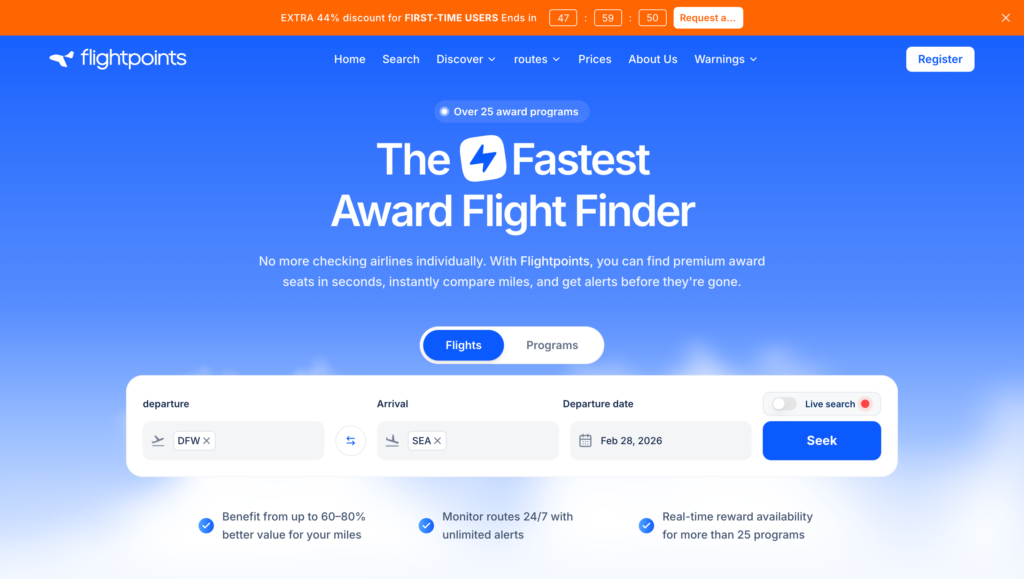
Flightpoints works as a decision layer across this process. It helps you evaluate options quickly without manually checking multiple programs.
Here is how it supports your decisions:
- Surfaces Optimal Transfer Paths: Identifies where to move points for better redemption outcomes.
- Compares Partner Program Pricing: Shows mileage differences for the same route across programs.
- Identifies Better Routes Quickly: Highlights options that reduce points or improve cabin quality.
- Reduces Analysis Paralysis: Filters choices so you focus on the most efficient options.
- Prevents Costly Transfer Mistakes: Helps you avoid irreversible decisions that reduce value.
Conclusion
Multi-city award trips work when you treat them as structured decisions, not just bookings. The route you design, the program you choose, and the sequence you follow decide your outcome. When done right, you get better routing, stronger value per point, and fewer mistakes that cost you later.
Flightpoints supports this process by helping you compare transfer options, evaluate pricing across programs, and identify better routes faster. You spend less time second-guessing and more time confirming the right decision before you move points.
Get faster and more accurate results with Flightpoints Pro today at 44% off. Start making smarter redemption decisions before award seats disappear.
FAQs
Q: How do multi-city award trips handle taxes and fuel surcharges across different airlines?
A: Taxes and surcharges vary by airline and routing, even for the same itinerary. You should review total cash components before confirming transfers. Some programs pass on higher carrier fees, which can change the overall value of your redemption.
Q: Can you modify a multi-city award trip after booking without losing points?
A: Changes depend on the airline program used for booking. Some programs allow date or route changes with low fees, while others restrict modifications. You should always check change and redeposit policies before confirming your itinerary.
Q: How do mixed cabin itineraries affect pricing in multi-city award trips?
A: Mixed cabin pricing depends on how the program calculates mileage. Some charge based on the highest cabin in the itinerary, while others price segments individually. This can impact whether combining cabins improves or reduces total value.
Q: What role do transfer timing and point expiry play in multi-city award trip planning?
A: Transfer timing affects whether award seats are still available when points arrive. Some programs transfer instantly, while others take time. Expiry rules also vary, so you should align transfers with confirmed availability.



[…] If you’re planning a trip that includes several destinations, understanding these limits can help you avoid booking errors and maximize the value of your ticket. […]