And What Is An Airline Loyalty Program? Is It Really Worth Giving a Try?
Before we begin, just to give the most basic understanding: A loyalty program is a marketing strategy that companies use to build customer relationships and offer benefits and rewards to loyal and repeat customers. Typically, Loyalty Programs are points-based or subscription-based.
Loyalty programs in the airline industry are called Frequent Flyer Programs (FFP). FFPs let people earn and redeem points (aka miles for airlines) based on spending with an airline or its partners.
With that said, let’s take a closer look into the details of airline loyalty programs and its benefits.
How Do Airline Loyalty Programs Work?
As mentioned above, airline loyalty programs are called Frequent Flyer Programs. They are incentive schemes offered by airlines to reward their passengers, build loyalty, and encourage repeat travel.
Initially, FFPs were simple: the more you flew, the more points or miles you earned and the more perks you got. This has now changed. Let’s see how.
How Do Passengers Earn Points?
Earlier, points or rewards were earned based on the distance covered. Many travellers took advantage of this and started increasing miles they flew to attain points. Connection flights were often used to increase mileage, and they were relatively inexpensive as well.
Today, most airline programs have shifted to a revenue-based model rather than miles covered. Which means, miles are accrued based on actual spending and not air distance. As a result, mileage manipulation and unnecessary connection flights have significantly reduced. Revenue -based programs also prioritize first-and business-class fliers that generate higher profit.
How Do Passengers Redeem Points?
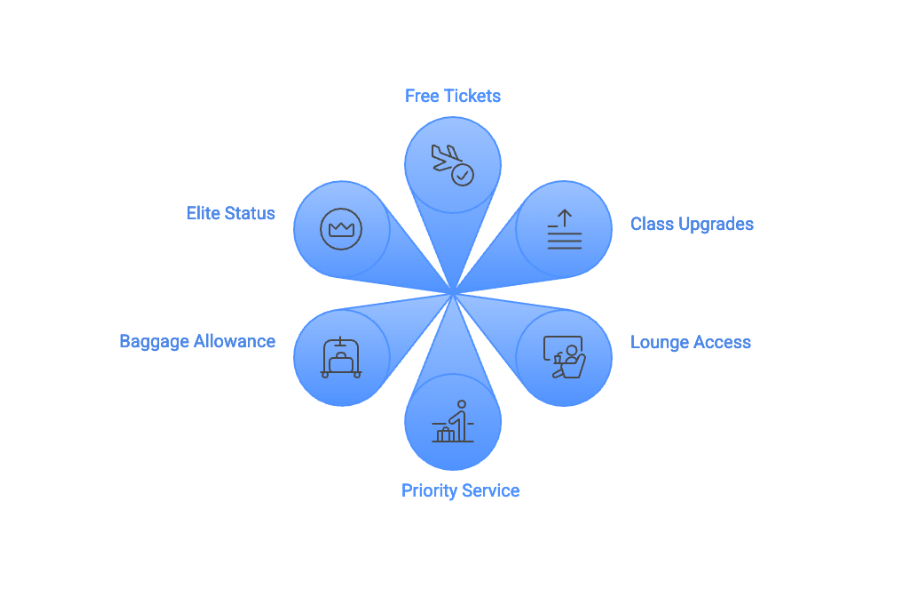
Traveler’s can redeem points for sweets perks like:
- Free tickets (tax and surcharges excluded)
- Class upgrades
- Lounge access across the globe
- Priority airport service
- Extra baggage allowance
- Elite status
A few things to keep in mind:
- Points cannot be exchanged for cash.
- The number of points required can increase 2× to 5× during peak seasons.
- Award seats typically open 330–355 days before departure, so early booking is strongly recommended—especially during holidays.
- Do not focus on a single route. Always compare routes before transferring points. FlightPoints makes award travel easier by showing all options on a single platform.
- Avoid last-minute bookings whenever possible.
- Use FlightPoints to track availability and set alerts for your preferred routes.
Traveler’s can benefit from partners beyond just earning and redeeming points. Wondering how partners help? Let’s find out.
Partner’s Role In Airline Loyalty Programs
People often think flying is the only way to earn points. When in fact it is not. Most airlines partner up with other travel and non-travel companies and use Frequent Flyer Programs to strengthen customer relationships beyond flights.
- Hotels, cruises, car rentals, and dining partners buy points from airline programs and offer them as a reward to their customers.
- Another concept called co-branded credit card points is where airlines partner up with banks to issue credit cards that allow FFP members to earn miles through every day spending. These credit cards offer high value points depending on the issuing bank. Most credit cards offer up to 100,000 miles for a spending of $5,000 within the first three months of opening the account.
Here’s a breakdown of how airline partners help in loyalty programs. This should give the idea in a nutshell:
Think of miles as airline-created currencies. Unlike real money, airlines can create this money with zero cost, and it’s not physical, they are digital.
- Step 1: Airlines sell miles in bulk to banks (like Amex, Chase), hotels, and shopping portals. In return banks pay roughly 1-2 cents per mile upfront in cash.
- Step 2: Banks give you these “free” miles. The sign-up bonus of 100,000 miles you got was actually bought by the bank for $1,500 when you signed up. You got them free, but the airline got instantly paid. For example, Chase buys miles from United for $1,500 and gives the user 100,000 miles.
- Step 3: You earn more miles with every day spending on co-branded cards. And airlines get another payment every time you swipe.
- Step 4: Most of the miles come back as redemptions, and since it costs nothing to create miles, airlines earn a huge profit.
More Things To Know
- Frequent Flyer Membership Cost
FFP membership is completely free. However, some charges may apply while reactivating the membership account.
- Expiration
Points expiration dates vary across airlines. But most points expire in 18-24 months of inactivity. And some don’t expire.
- Points for Business Travel
You still get points in your personal account if the business trip was sponsored by your company.
- Elite Status
There are tiers of memberships you can sign up for. Elite status can be achieved through either the accumulation of points or other cases like using premium status co-branded credit cards.
- Airline Alliances
Airlines form a strategic partnership called alliances, where benefits are shared while maintaining brand identity. This smoothens operational resources and the global network. There are three major alliances:
With alliances, travelers can redeem points from one airline to enjoy perks from its partner airlines as well. Refer to our blog on Alliances to dive deep into this.
Conclusion
This blog aims to give a basic understanding of a bigger picture for those who miss out on Airline Loyalty Programs. With a little bit of strategy you are just a few steps away from unlocking premium award travel.
Ready to fly premium for pennies? FlightPoints is the best award travel tool that simplifies award hunting across all alliances.
Ready to fly premium for pennies? FlightPoints is the best award travel tool that simplifies award hunting across all alliances.
FAQs
Do I need elite status to book award tickets?
No. Anyone can book awards, but elites get priority availability (extra saver seats) + waived fees. Status also unlocks lounge access on partner airlines.
Can family members pool their airline miles?
No direct pooling, but most programs allow family accounts (United, Delta) or companion tickets (buy-one-get-one-free awards).
Which credit card gives the most airline miles?
Get Chase Sapphire or Amex Gold (called “transferable points” cards). They give you 100,000+ points when you spend $4,000-$5,000 in 3 months.
Can I transfer points between different airline programs?
No. For example, once transferred from Amex/Chase to Delta SkyMiles, you’re locked to SkyTeam partners. No cross-alliance transfers. So, choose wisely before transferring.
[…] airlines now use dynamic pricing, meaning award costs can change multiple times per day based […]