Have you ever searched for an award flight and thought “there are so many empty seats, why can I not book them with miles”? If yes, you are not alone. This frustration is common among travellers looking for award travel.
At first glance, it is logical to think that an empty seat means an available seat that can be redeemable with points. But airline revenue systems don’t work that way.
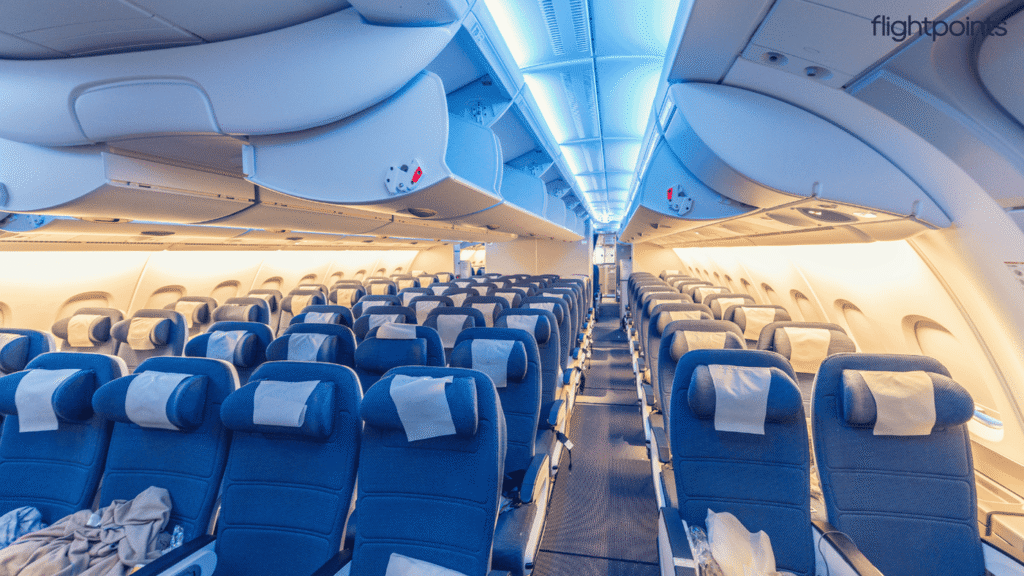
Award seats come from a separate inventory controlled by revenue management algorithms, airline rules, alliance agreements, and profit, not just empty seats.
This blog will break down the real reasons why empty seats don’t mean award seats and different fare mechanics.
Key Takeaways
- Empty seats do not equal award seats. Airlines separate cash inventory using dedicated fare buckets. Unless these fare buckets show availability, award space remains zero even if the plane is half empty.
- Revenue management systems run everything. Airlines prioritize expected revenue, not seat occupancy.
- Saver awards are limited and strategic. They offer the highest value for miles, but are released selectively to balance loyalty and profit.
- Dynamic pricing has changed the game. Many airlines now has award seats based on cash fares, which means empty seats can still cost high mileage amounts.
- Timing and route economics affect availability.
- Seat maps are misleading. An empty cabin does not mean it is eligible for award space. There are many reasons for this, which will be discussed as you read along.
What Award Seat Availability Actually Means
Award seat availability refers to the seats that airlines release specifically for award travel (redemption of points and miles). These seats are not pulled from the general seat inventory. Instead, they are allocated into dedicated fare classes (AKA award fare bucket). They have codes for each award seat. For example:
- Economy Saver Awards = X
- Business Saver Awards = I
- First Saver Awards = O
If these fare buckets show zero inventory, award seats are considered unavailable even if half the plane is empty. It is crucial for beginners to understand this distinction that a flight could show 100 empty cash booking seats and still zero award seats. This is because the airline has decided those seats are more valuable when sold for money. Here is a simple explanation on award fare buckets for easy understanding.
Understanding Award Fare Buckets (Inventory Mechanics)
Award seats live in specific booking classes, separate from paid fare classes.
| Cabin | Paid Fare Buckets | Award Buckets |
| Economy | Y,B,M,H,Q | X |
| Premium Economy | W,E | A |
| Business | J,C,D | I |
| First | F,A | O |
If you search availability using expert tools you will find these buckets.
For example, on a United flight from New York (JFK) to Frankfurt (FRA), let’s say it shows:
- J9 (means 9 business cash seats)
- I0 (means zero saver business awards)
As you can see in this example, even when there are business class seats available, award seats still remain empty. Airlines intentionally separate inventories. The 9 J seats might be protected for high-paying corporate customers.
United only releases I seats if revenue forecasts show excess capacity (e.g., only 70% J load expected). Even with physical space, saver inventory remains blocked to avoid displacing $5,000 cash. So, revenue wins over occupancy.
How Airlines Decide Award Availability
Airlines use revenue management systems that show:
- Demand trends
- Route profitability
- Season traffic
- Corporate bookings
- Redemption history
With these insights airlines dynamically adjust award seat availability to maximize revenue.
- High-Demand Flights: airlines predict strong cash bookings so they limit or provide zero saver award seats, entirely prioritizing full-price tickets.
- Low-Demand Flights: For underbooked flights they release more seats for award travel to monetize empty inventory using pre-sold miles, without undercutting cash fares.
Revenue management systems monitor real-time bookings which is why seats shift every hour.
Why Airlines Don’t Release Award Seats on Empty Flights
To be honest, airlines care about expected revenue, not current load. It is one of the biggest myths that empty seats automatically means award availability. A flight that looks empty may fill-up with last minute business travelers, corporate contract bookings, or be oversold later.
For instance, if a flight from New York to London shows dozens of empty seats two months out, airlines know this route will attract high-fare corporate travelers booking late.
Hence, instead of converting these seats into award spaces, they leave it for cash buyers. Only if the demand fails to materialize will they release this space as an award seat close to departure.
Are you tired of continuously looking for award seat availability from multiple airline websites? Checkout Flightpoints to see availability across multiple airlines and programs on a single platform. Also set alerts to notify when there is an availability.
Saver Awards: The Core of Real Value
Saver awards are the lowest priced award seats airlines offer. They are what makes premium cabin redemptions valuable. For example, a business class US to Europe would cost around $3,000-$8,000 in cash. But in miles this would be 60K-80K miles in business-class saver and 100K-120K miles for first-class saver. Saver awards deliver the outsized value that makes award travel worth it. But the thing is, they are limited. Airlines release them strategically to:
- Stimulate demand
- Fill weak flights
- Reward loyalty
Hence, not every single flight gets a saver award space.
What Airlines Achieve Through Saver Awards
Saver awards serve multiple airline goals. First off, it serves as a marketing tool that offers valuable redemption options that encourage customers to earn miles through flights and credit cards.
Second, they help in filling distressed inventory. If a flight isn’t selling well, opening saver space fills seats without discounting cash fares publicly.
Thirdly, saver awards help airlines meet alliance obligations without risking their own revenue. Alliance agreements require members to offer each other some access to premium seats for redemptions. So, airlines allocate a fixed, small number of seats for partners, separate from their own program’s inventory.
Why Empty Flights Don’t Often Have Saver Awards
Shouldn’t at least saver awards be open on empty flights!?
Not necessarily. There are several reasons to this:
- Forecasted Demand
Airlines expect late bookings.
- Hub Protection
Hub protection prioritizes award seats on flights that connect to an airline’s major hubs, reserving them for passengers making longer connecting itineraries. So saver awards are blocked to guarantee seats for high-value connecting traffic (like someone travelling from NYC-ATL-SIN on a single award ticket).
- Corporate Contracts
Seats may be reserved for negotiated corporate fares. Large companies sign deals guaranteeing discounted bulk fares or the last seat availability on full flights.
- Yield Optimization
Selling one $5,000 ticket is better than two saver awards.
- Upgrade Inventory
Seats may be held for elite upgrades instead of awards.
This is why empty seats you see today aren’t equal to low values tomorrow.
Saver vs Dynamic Pricing: A Direct Comparison
Understanding the difference between saver and dynamic pricing explains most availability confusion. Fixed and dynamic pricing represent two different ways airlines manage redemption demand while keeping loyalty programs sustainable.
Saver Pricing | Dynamic Pricing |
| Fixed or semi-fixed number of miles. | Tied to cash fares. |
| Limited inventory. | Unlimited inventory possible. |
| Partner bookings are highly possible. | Not always partner bookable. |
| Highest value per-mile. | Often poor value. |
| Example, 70K miles for a business saver. | 220K for the same seat. |
Why Airlines Prefer Dynamic Models
Dynamic pricing allows airlines to:
- Monetize high demand.
- Reduce liability from unredeemed miles.
- Control redemption costs.
- Match award pricing to revenue forecasts.
This is why programs like Delta moved to almost fully dynamic.
Credit Card Transfer Partners: How They Impact Strategy
As you might already know, credit card points transfer to airline programs converting flexible rewards into miles for award bookings. Flexible currencies include:
Points from these cards are transferred to airline partners for miles. (these are just the major US-based travel credit cards, there are more). But transfers are usually irreversible. If you transfer without checking saver availability, you risk being stuck with miles you can’t use efficiently.
For example, you transfer 100K points to an airline expecting a business saver space. But the saver inventory is gone. Now you are only left with the options to book dynamic awards at high values or else wait months for a space. If neither works, those miles are gone fully unused and wasted.
Alliance and Partner Availability Dynamics
Airlines don’t just control their own seats. They also decide what their partners can access. Saver buckets are typically what partners see. Airlines tightly control partner access to award seats. Even empty cabins and cash seats won’t show up for alliance partners if saver inventory isn’t released.
So, basically there are two views here. ‘Own program view’ and ‘partner program view’. The below illustration with examples will help you understand why partners show empty seats even when there are seats available in their own program view.
| Scenario | Own Program View | Partner View | Physical Seats | Reason for Difference |
| High demand | I4 (4 saver awards available) | I0 (no saver awards) | 70% full | Own customers prioritized, partner access restricted. |
| Low demand | I8 (8 saver awards) | I2 (limited saver) | 40% full | Minimal partner space released after own needs. |
| Awards fully blocked | I0 (no saver awards) | I0 (nothing visible) | Empty premium | Saver buckets closed to protect revenue. |
| Partners-only release | I0 (own saver blocked) | I4 (opened for partners) | Half full | Meets alliance contracts without direct sales impact. |
Availability is something that commonly frustrates someone who tries to book an award travel. But with an effective award search tool, this can be solved fully. Flightpoints is the fastest award search tool that shows real-time availability across multiple airlines and programs. Sign up now to find the best award travel options.
Why Timing Matters in Award Availability
Beyond inventories, timing is also a reason why empty seats don’t translate to award seats. When you understand these timing and structural factors, award availability starts to look predictable rather than mysterious.
- Scheduled Opening
Most airlines open their bookings roughly 330 days before departure. This is one of the first moments when saver award seats enter the system. At this stage, airlines release a small batch of low-level awards to stimulate early demand and engage loyalty members planning far in advance.
These early saver seats are limited and tend to disappear quickly. Premium cabins in high demand international routes especially. For date and destination flexible travellers, this offers some of the best redemption opportunities at very low mileage levels.
However, airlines release these seats meticulously. They must balance loyalty engagement with revenue protection. Releasing too many saver seats could displace potential high-fare bookings, mostly from corporates who book months later.
- Mid-Cycle Adjustments
As departure approaches, airlines analyze booking performance through revenue management forecasts. If demand is weaker than expected, they may open additional saver inventory months after the initial schedule.
This mid-cycle adjustment arrives quietly. There is rarely an announcement. Award spaces simply appear in searches. These adjustments are decided by revenue management systems rather than pre-planned loyalty programs.
With Flightpoints you wouldn’t have to worry about missing award spaces. Create and manage alerts on Flightpoints to never miss an award availability or price-drop.
- Last-Minute Releases
Last-minute award space releases are the most valuable timing patterns in award travel. If premium cabin spaces remain unsold within the last 1-14 days of departure, airlines may release saver awards rather than leave those seats empty.
This pattern is especially common on long international routes where business and first-class carry high cash fares but inconsistent last-minute demand. Rather than lose all revenue, airlines convert these empty cabins into loyalty redemptions, reducing mileage liability while improving cabin load.
For travellers flexible with rates and risks, last-minute booking can unlock premium experiences at saver rates that were unavailable months earlier.
Route Economics and Award Strategy
Not all routes behave the same when it comes to award travel. Airlines also process award inventory based on the economic profile of each route.
Routes dominated by corporate travel tend to have the most restricted saver availability. These markets create high last-minute revenue, especially in premium cabins.
Examples include flights from New York to London, San Francisco to Tokyo, Los Angeles to Frankfurt, and more. These routes see strong year-round demand from finance, tech, and other MNC sectors. Business travelers often book close to departure and pay premium fares. This is why airlines are hesitant to release saver awards early.
The same technique is also applicable to leisure-dominant routes. Examples include Mainland US to Hawaii, Caribbean routes, Mexico vacation markets, and more.
The Real Economics Behind Award Seats
Airline financial accounting is the real core of award availability. Frequent Flyer Miles are not just a marketing tool, they are balance sheet liabilities.
When airlines issue miles through flights, credit cards, and partners, they incur a future obligation to provide rewards. Billions of unredeemed miles sit on airplane financial statements at any given time.
Redeeming miles reduces this liability, but doing so too generously can erode revenue. Each saver award space displaces potential cash sales, especially for premium cabins. Therefore, airlines move strategically:
- If they release too many saver awards, they are losing high-yield revenue.
- If they release too few saver awards, loyalty engagement weakens and credit card partnerships lose value.
Saver awards become the balancing lever between these competing financial pressures. Airlines release just enough award space to maintain loyalty relationships while protecting their revenue wise profit.
So, rather than calling it cabin ‘emptiness’, this is an ‘equilibrium’ that ultimately determines whether saver awards should be released or not.
The Psychology of Empty Seats in a Nutshell
Seat availability is one of the most misleading factors in award travel. Beginners often interpret empty seats as unsold inventory that is available for redemption. But the reality is that these seat maps do not reflect the revenue management data.
Seats may appear empty because they are:
- Blocked for elite status passengers.
- Reserved for last-minute upgrades.
- Held for operational re-accomodation.
- Assigned, but not yet reflected publicly.
Airlines prioritize operational flexibility. They must accommodate missed flights, connections, aircraft swaps, and irregular operations. As a result many seats remain unassigned until close to departure.
How To Find Saver Award Space
As you might have understood now, saver inventory is controlled and limited and so, search strategy becomes critical. Travelers who rely on simple round-trips often lose the opportunity of award travel because they missed the available space that existed in the system.
One way to solve this is to sign up for an effective award search tool where you can find and set alerts for availability. This is why Flightpoints is the best option for award space search. At Flightpoints you can browse real-time award space across multiple airlines and programs.
Keys that unlock easy award travel:
- Flexibility in dates
- Alternate airports
Flexibility is actually the single most powerful key that unlocks award travel. Changing dates by even one or two days could reveal award spaces hidden within surrounding availability gaps.
Alternate airports, at both origin and destination can also bring out inventory that does not appear on primary route searches.
These search techniques form the backbone of advanced award booking strategy and connect directly to broader optimization methods.
Conclusion
Empty seats don’t mean award seats because airlines do not manage inventory based on what looks empty. They manage it based on projected revenue. It operates within a structured system of fare buckets, revenue forecasts, alliance agreements, and financial liabilities.
Saver awards are not just any leftover seats. They are carefully controlled tools airlines use to balance loyalty attractiveness and profitability.
When you see an empty cabin two months before departure, that does not signal a guaranteed award seat. It signals potential future revenue. Airlines will always protect high-yield cash sales first. Saver awards are then released only if the forecast weakens, timing shifts, or if the revenue targets are met.
Once you stop equating visual emptiness with redemption opportunity and start focusing on inventory mechanics, award travel becomes far less frustrating and more predictable.
Ready to simplify your award search? Flightpoints make finding award seats easier and faster. Upgrade to Pro now and get 44% off for all services.
FAQs
Q: Do empty seats ever become award seats later?
Yes, if demand underperforms, airlines may release award inventory close to departure. Last-minute releases are usually the best deals.
Q: Why do saver awards disappear?
They are not gone. But they are less predictable due to dynamic pricing expansion. Airlines suppress low mileage savers to push higher dynamic rates or cash fares. Even though the underlying saver buckets still exist, search engines prioritize revenue maximizing options.
Q: Do credit card portals access saver space?
No, credit card portals don’t access saver pace. Portals book cash fares using points at fixed value. Airlines do not give these portals access to saver award availability. They are exclusively for loyalty programs, not portal partners.
Q: Why do partners see less availability?
Partners see less availability because airlines restrict partner access to protect revenue on their own channels. Operating airlines release minimal saver buckets to partners while keeping fuller inventory for their own program. This fulfils alliance contracts without letting partners flood flights with cheaper awards.
Q: Do elite members get more award access?
Yes, elite members often get more award access. Higher tiers unlock “elite saver” buckets or larger standard saver inventory. Availability expands closer to departure as airlines prioritize loyal high-spenders.