
Do you look up at the sky and wonder how many flights may be up there? The answer is more than what you might think. There are thousands of planes flying just today. Global aviation network is one of the most complex networks in the world. According to Flightradar24, 100,000-130,000 flights take off each day. How is it possible to connect and plan with thousands of routes operating daily? The answer to this question lies in “Airline Alliances”.
In this blog we will look into what airline alliances are, why they were created, and who are the major alliances.
What Are Airline Alliances?
Airline alliances are strategic partnerships among airlines. They maintain separate corporate identities and financial independence, while working together to share routes, operational resources, and passenger benefits. With this, passengers can benefit across many airlines with one ticket of the same alliance. With thousands of planes in the sky a day, alliances help in having better coordination and connection.
Benefits of Airline Alliances:
- Larger combined networks
- Cuts major costs and boosts operational efficiency
- Enhanced quality of service
- Passengers get multiple benefits like miles, lounge access with a single ticket (will be explained more)
Let’s look into the details on how alliances work and how they benefit from a travellers pov.
How do Airline Alliances Work?
As mentioned above, the main function of alliances is to create connectivity among airlines. This is because no airline flies to all countries/regions. Hence, it is essential for airlines to work together for transit purposes. For example, if someone wants to travel from Sydney to London via Doha, tickets will be booked on flights that come under the same alliance. Here, under Oneworld Alliance, Qantas flies from Sydney to Doha and then Qatar Airways takes over to fly from Doha to London. In between, the passenger doesn’t worry about baggage transfers. Ground staff use shared systems for seamless check-ins and revenue will be proportionally split between airlines.
There are many technical reasons to why airline alliances remain relevant in the aviation industry, however, our focus here is from a traveller’s perspective. How do alliances benefit a traveller? How to use alliances while planning a journey? And why is it especially relevant while flying with miles and points? Let us look into it.
Alliances and Loyalty Programs
Alliance cooperation is based on mutually interconnected Frequent Flyer Programs that allow passengers to earn and redeem miles across partner airlines. These loyalty programs offer valuable offers that are often unnoticed. Elite status travellers get even more valuable perks while travelling. Few of them include:
- Priority check-in
- Extra baggage allowance
- Skip long security checks
- Preferred seats
- Worldwide lounge access
Even though each airline has its own loyalty programs, these partnerships/alliances simplify benefit sharing. For example, a KrisFlyer member books a Lufthansa flight from Singapore to Frankfurt, connecting on Thai Airways Frankfurt to Bangkok, all on one Star Alliance ticket using KrisFlyer miles. Miles used across airlines under the alliance, bags transferred automatically, elite perks recognized end-to-end.
Why airline alliances benefit passengers:
- Passengers gain access to larger travel networks for more flights and to reach destinations no single airline could provide.
- Better communication in multi-ticket booking situations.
- Access all benefits like lounges and priority boarding of the airlines that fall under the same alliance.
- Shared baggage handling systems create chaos free baggage transfer.
- Competition among alliances might create lower costs for tickets.
Make sure to use the best award booking platform when booking flights to acquire maximum benefits.
Now comes the big question: who are the major alliances?
The 3 Major Airline Alliances Explained
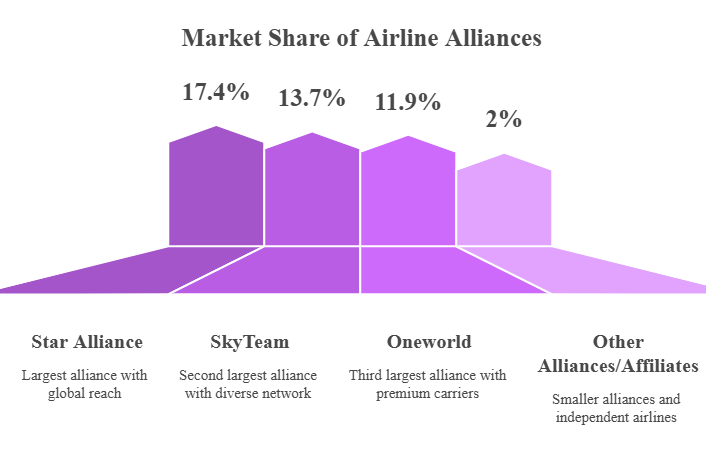
Understand the major alliances, what they offer, and their benefits.
Star Alliance

The oldest yet still growing alliance, Star alliance comprises 25 member airlines with an approximate of 19,000 departures every day. With more than 1000 lounges worldwide, Star Alliance was created on a purpose to provide seamless travel and connectivity across the globe. It collaborated with the world’s top airlines with shared systems and coordinated operations all while maintaining each of their own brand identity and enhancing global connectivity.
Key Features:
- Multiple airline benefits with a single booking.
- Combined Frequent Flyer Programs.
- Elite membership status will be recognized across all airlines.
- Seamless transfer of points from one airline to another.
- When flying with Frequent Flyer Programs, Star Alliance has options to upgrade the award rewards.
Corporate Plus for Enterprises
Star Alliance offers a comprehensive program for business travellers called the Corporate Plus. It offers an all in one business travel suite for corporate travels that require more than one airline. With this companies can combine up to three Star Alliance member airlines into a single agreement by eliminating multiple contracts and paperwork. With this centralized approach, enterprises gain access to a one-stop system with improved efficiency and corporate travel benefits. Businesses can also leverage strong European connections through partners like SWISS and benefit from competitive fares on individual and group bookings.
SkyTeam
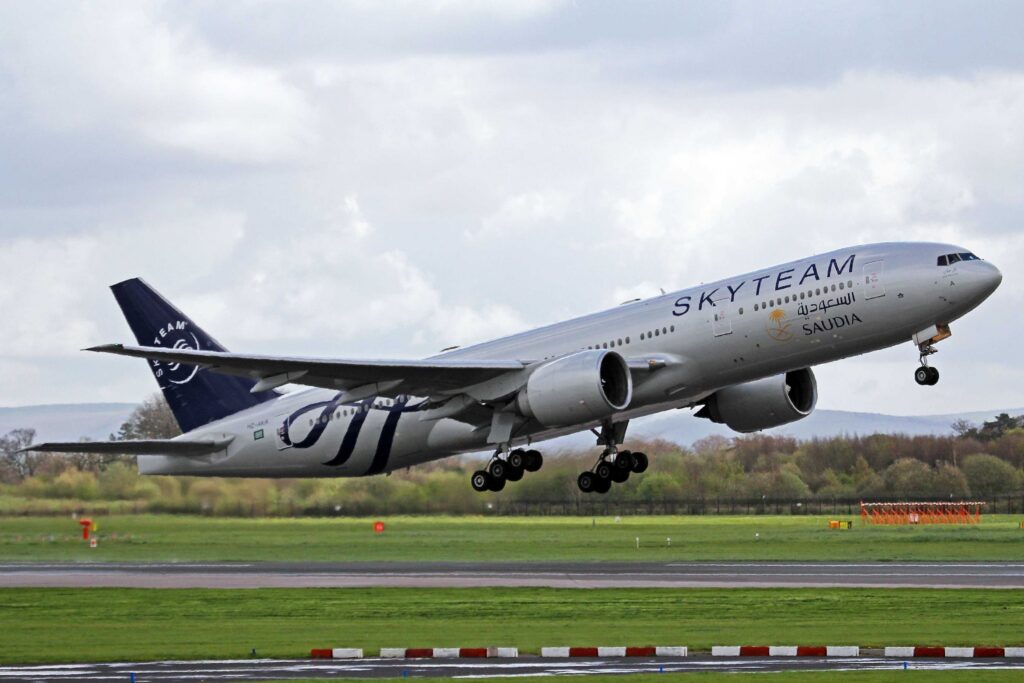
The youngest of all, SkyTeam has a total of 18 airline members, serving more than 1,000 destinations across 160 countries. It also provides access to 750 lounges worldwide. Established by airlines such as Aeromexico, Delta Airlines, Air France, and Korean Air, SkyTeam was formed with a purpose to enhance global connectivity and focus on overall passenger experience. The alliance also promotes the use of sustainable aviation fuel across its airline members.
Key Features:
- Great global network with over 1000 destinations across the world.
- SkyPriority program for seamless airport processes.
- Offers variety of options for different Frequent Flyer Programs
- Access to more than 750 lounges worldwide.
Global Meetings For Enterprises
SkyTeam Global Meetings support enterprise-level corporate travel. This program offers dedicated account management systems, reward tickets, and up to 15% discounts on international business travel with 50+ delegates from at least 2 countries.
Oneworld
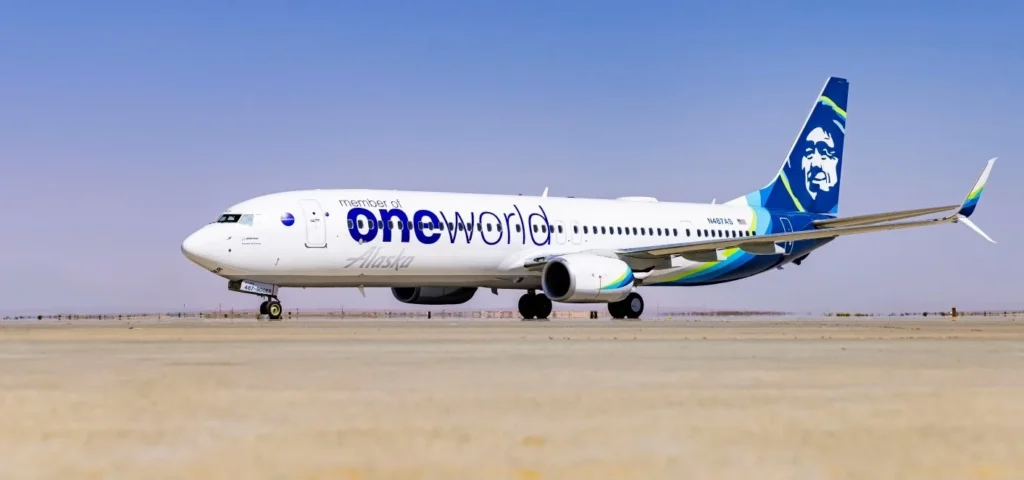
Oneworld is the smallest of all three major global alliances, with 15 member airlines. It provides access to almost 700 lounges and up to 13,000 departures each day. The alliance was founded by Cathay Pacific, American Airlines, British Airways, and Qantas, with Oman Air being the latest addition to its members.
Oneworld Alliance was created to provide exclusive global networks to other areas of the world. It focuses on offering seamless travel connectivity, premium services, and operational efficiency.
Key Features:
- Global network of 170 countries flying to more than 900 destinations.
- Complex itineraries offer AI based booking systems.
- Shared benefits for Frequent Flyer Programs.
- Access to 700+ lounges.
- Priority services.
Global Corporate Travel Programme For Enterprises
Oneworld’s Global Corporate Travel Programme simplifies business travel for multinational corporations across Oneworld airlines. It offers discounted fares, priority services, easy check-ins, international lounge access and pre-booking opportunities. Each company receives a dedicated single contact for communication and a 4-year legal contract.
There are three tiers within the Frequent Flyer Programs in Oneworld:
- Ruby: Provides priority check-ins, preferred seating, and priority waitlisting services.
- Sapphire: Global access to business class lounges, and baggage allowance additional to all Ruby offers.
- Emerald: First and Business-class lounge access, fast track security checks, priority in all areas of contact, and maximum baggage allowance.
This wraps up the three major airline alliances. However, these are not the only alliances, there are more.
| Alliance | Founded in | No. of Airlines | World Share | Countries | Airports | Current Status |
|---|---|---|---|---|---|---|
| Star Alliance | 1997 | 25 | 98% | 192 | 1160 | Still Expanding |
| SkyTeam | 2000 | 19 | 85% | 160+ | 1052 | Youngest |
| Oneworld | 1999 | 15 | 12% | 170+ | 900 | Smallest |
How Does Alliances Help in Award Travel Using Points?
Airline Alliances play a huge role in award travel by unlocking great values for earning and redeeming points across many partner airlines. For example, transfer your Chase Ultimate Rewards to United MileagePlus to book Lufthansa business class to Europe, all using the same miles. (If you need an understanding on award travel refer here). This creates “sweet spots” where these partner programs give better pricing than the airline. You get ticket price benefits, priority check-ins, baggage allowance, and more elite perks like lounge access across many airlines.
In short, your credit cards would only unlock a single or few flights with points. But with alliances, your options are vast and you can explore many more flights and routes. Just to make things clear, here’s one more example: If you have Amex Membership Rewards points, and you transferred it to Delta SkyMiles, you can only book flights operated by Delta and a few partners only. But with alliances like SkyTeam, these same points now can be used in 19 different airlines such as Air France business class to Paris, Virgin Atlantic to London, Korean Air prestige class to Seoul, and more. So, with alliances you get 19 better redemption options instead of 5 or 10 max.
With that being said, are you confused on how to choose the best alliance for you? We’ve got you.
How to Choose Your Alliance?
With 3 major alliances and more carriers to choose from, it might be confusing to choose which alliance is the most suitable and effective. Some determiners mentioned here will assist you in choosing the right partner.
- Consider your most used airlines.
The simplest way to get started with alliances is to choose from your most frequently used airline. For example, if you fly mostly on Delta, the obvious option is SkyTeam since Delta falls under this alliance. With this, you can reach the loyalty status faster and acquire the shared benefits from its partner airlines.
- Consider your destinations
If you are domestically travelling mostly to the US and internationally to Europe, or Asia, Star Alliance and Oneworld are the suitable options since they cover those areas. But for travellers aiming for specific parts of Europe, East Asia, and Latin America, SkyTeam suits better.
- Consider elite status
If you hold elite status in any airline, choose the alliance that falls under that alliance. This way you get maximum benefits of award travel from its shared partners as well. This will also provide consistent elite perks like faster check-ins, priority baggage transfers, lounge access, and preferred seatings.
For a better understanding, let us compare the perks of each alliance.
Bottom Line
Airline Alliances are the reason why global connections seem to be chaos free and create smooth travel experiences for customers. From business travel to leisure travels, alliances play a key role in delivering the best travel experiences. Find out more about alliances and start planning your trips now.
Can I book other airlines within the same alliance with the same points?
Earning and redeeming across member airlines is possible. However, each airline has their own Frequent Flyer Programs. These cannot be combined. You can only transfer your miles to one FFP account
What happens if one of my connection flights gets delayed and I miss the other flight on the same alliance?
If both the tickets are booked on a single itinerary, then the responsible airline will rebook another flight and resolve the issue. But if they are separate bookings, airlines won’t take responsibility.
Do alliances always guarantee cheap pricing?
Not always. Prices vary from routes to airlines. But alliances allow exploring multiple options of routes and airlines. And if you have miles, alliances help in getting most of it.
Do alliances have their own loyalty programs?
No, alliances don’t have loyalty programs. Each member airline of an alliance has loyalty programs of their own.



[…] more about global airline alliances before comparing individual […]
[…] service system, reservation database, or distribution partner. Similar differences occur across airline alliances when partners receive limited award […]