Table of Contents
You’re staring at the screen. A business class award seat from Newark to Rome is showing 88,000 miles. Your balance is 63,000. You’re 25,000 miles short — and the seat is one of the last few showing for that holiday week. If you don’t lock it in by tomorrow morning, it’s gone. So how do you get those 25,000 miles?
This is one of the most common scenarios in the points world: you’ve identified the redemption you want, you’re short by a meaningful but manageable amount, and you need to top up fast. The good news is there are six different ways to do this in 2026. The bad news is most travelers default to the worst option — buying miles directly from the airline at 3+ cents per mile — without checking the alternatives that cost half as much.
This guide walks through every realistic miles top-up option for securing a holiday award seat in 2026: the math behind each, when it makes sense, when it doesn’t, and how to pick the right path for your specific situation. Every recommendation is built around actual 2026 program data — buy rates, transfer bonuses, redemption values, and the speed of each top-up method.
Search award flights on Flightpoints →
Discover the True Value of Your Points
Ready to see what your points are really worth? Get FlightPoints Pro and find the cheapest award seat across every program in seconds.
Get FlightPoints ProThe Core Question: How Many Miles Do You Actually Need?
Before evaluating top-up options, you need to know two numbers with precision:
- The exact miles cost of your target award (from the airline you’re using to book)
- Your current balance in that program (including pending earning that will post before booking)
The gap between these two numbers determines which top-up option makes sense. Common gap ranges and the strategies that fit each:
- Less than 5,000 miles short: Direct purchase from the airline often makes sense despite high per-mile cost, because the absolute dollar amount is small. A 3,000-mile purchase at 3 cents per mile costs $90 — cheap insurance to lock in a $2,000 flight.
- 5,000 to 25,000 miles short: Sweet spot for credit card transfers, especially with active transfer bonuses.
- 25,000 to 75,000 miles short: Credit card welcome bonuses, transfer bonuses, and rapid-earning category strategies all become attractive.
- More than 75,000 miles short: Direct purchase becomes prohibitive ($2,200+ for 75,000 miles at standard rates). Best paths are large welcome bonuses, multiple transfer routes, or pivoting to a different award redemption that costs fewer miles.
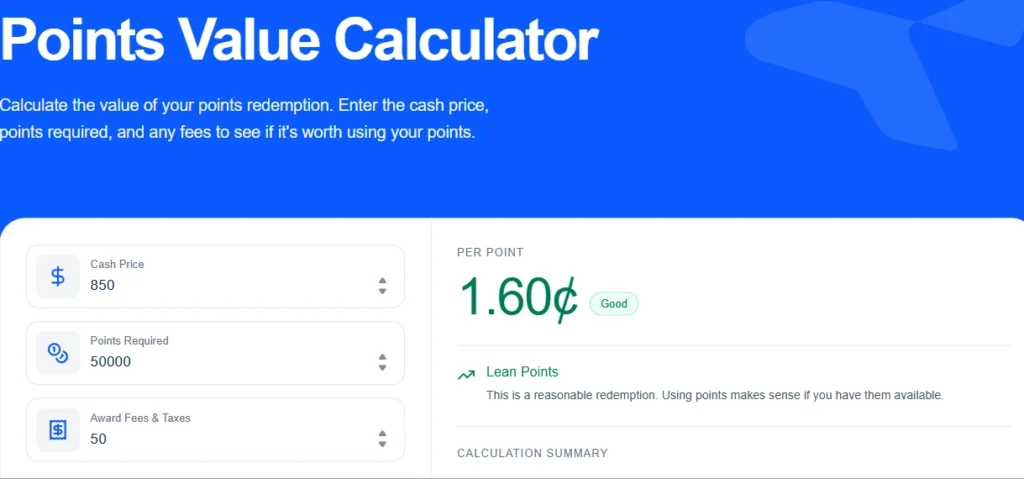
For a quick gap calculation, use Flightpoints’ Points Calculator — enter your current balance and target award, and the calculator instantly shows exactly how many miles you need to add.
The Six Ways to Top Up Miles in 2026
There are six distinct paths to adding miles to your account when you need to close the gap on a holiday award. Each has different costs, timelines, and strategic uses.
1. Transfer Credit Card Points (Best Option for Most Travelers)
Transferring points from a flexible currency to an airline program is almost always the best top-up option in 2026 — especially when a transfer bonus is active.
How it works: You hold points in a credit card flexible currency (Amex MR, Chase UR, Citi ThankYou, Capital One Miles, Bilt Rewards, Wells Fargo Rewards, or Bank of America Premium Rewards). You log into your card portal, select your target airline, and transfer points at the bank’s published ratio. Most transfers are 1:1.
Why it’s usually the best option:
- Transfer ratios are typically 1:1 (vs. buying miles at 2.5–3.8 cents per mile)
- Transfer bonuses (10–30% common, occasionally 50%+) effectively reduce your cost further
- Most transfers post within minutes (United, Hyatt, Hilton) or 1–24 hours (most airline partners)
- No financial commitment beyond points you’ve already earned
Active transfer bonuses to watch in 2026 (representative examples from May 2026):
- Chase Ultimate Rewards → Air France-KLM Flying Blue: 20% bonus
- Amex MR → JetBlue TrueBlue: 10% bonus
- Capital One Miles → Qantas Frequent Flyer: 20% bonus
- Chase Ultimate Rewards → Aeroplan: occasional 20% bonuses (last seen April 2026)
- Chase Ultimate Rewards → Southwest Rapid Rewards: rare bonus (occurred May 2026)
The trade-off: Transfers are irreversible. Once you move 25,000 Chase points to Flying Blue, they’re Flying Blue miles forever. Only transfer when you have a specific award confirmed available.
Best for: Closing gaps of 5,000–75,000 miles, especially when a transfer bonus is active.
2. Buy Miles Directly From the Airline (Expensive, But Sometimes Justified)
Every major airline sells miles directly through their own program. Pricing varies, but most airlines charge 2.25–3.76 cents per mile at the standard rate, with periodic promotions that drop the effective cost to 1.5–2.0 cents per mile.
Standard buy rates in 2026 (without promotions):
With promotional bonuses (often 80–125% bonus):
When it makes sense:
A practical example: buying 25,000 American AAdvantage miles at 2.5 cents (during a sale) costs $625. If those miles unlock a Qatar Qsuite seat valued at $7,500, the math works. If those miles are going toward an economy domestic flight that costs $300 cash, it doesn’t.
3. Credit Card Welcome Bonuses (Best for Larger Gaps)
For gaps of 50,000+ miles, a new credit card with a welcome bonus is often the cheapest top-up path. Most premium travel cards offer 75,000–150,000 points after meeting a minimum spend requirement, with some offers reaching 200,000+ during peak promotional periods.
Why this works for holiday travel top-ups:
- A 75,000-point welcome bonus delivered via a Chase Sapphire Preferred or Capital One Venture X transfers 1:1 to multiple airline partners — instantly closing most miles gaps
- Welcome bonuses post within 6–8 weeks of meeting the spend requirement
- Many cards have $3,000–$5,000 minimum spend requirements achievable through routine purchases
- The annual fee (typically $95–$695) is often offset by built-in credits and the welcome bonus value
Caveat: This path requires planning. A new credit card welcome bonus typically takes 8–12 weeks from application to points posting. If your holiday trip is more than 3 months away, this is one of the highest-value options. If you’re booking inside 30 days, it’s too slow.
Best for: Holiday trips booked 3+ months in advance with a gap of 50,000+ miles.
4. Earn Miles Faster Through Category Spending (Slow but Free)
If you have time before your holiday trip, accelerated category earning can close gaps without any cash outlay beyond your existing budget. Most premium credit cards offer 3–5x points on travel, dining, groceries, and other categories.
Realistic earning calculations:
- $2,000/month on a 3x dining card = 6,000 points/month
- $4,000/month routed through 3–5x category spending = 12,000–20,000 points/month
- Holiday Q4 rotating category bonuses (Chase Freedom, Discover IT) often hit 5x in November–December
When this works: If you’re 20,000–40,000 miles short and have 60–90 days before booking deadline, optimized category spending can close the gap entirely without any extra cost.
When it doesn’t: If your gap is large (50,000+) or your timeline is short (less than 60 days), category earning alone won’t close it. Combine with other strategies.
5. Shopping Portals and Dining Programs
Most airline programs operate shopping portals (Alaska Mileage Plan Shopping, AAdvantage eShopping, Delta SkyMiles Shopping) where online purchases earn 1–10x bonus miles. Dining programs similarly add miles for restaurant visits with a registered credit card.
Realistic value: $1,000 in shopping portal purchases at 3x average = 3,000 bonus miles; $200/month in dining at 5x = 1,000 bonus miles/month. Holiday Q4 portal bonuses often double base rates.
Best for: Closing small gaps (2,000–10,000 miles) without affecting your normal spending patterns.
6. Award Sale Promotions (Rare but Game-Changing)
A few times per year, airlines run promotions that effectively reduce mileage requirements rather than reducing buy costs. Examples: Flying Blue Promo Rewards (monthly, 25% off select routes), ANA’s flash redemption sales, Aeroplan’s occasional 25%-off partner promotions.
These aren’t top-ups in the traditional sense — they reduce the miles you need rather than adding to what you have. But if your target route is included in a Promo Rewards window, the redemption cost drops from 25,000 to 18,750 miles (a 25% discount), instantly closing your gap without any actual top-up.
Best for: Travelers with flexible dates who can shift their booking to a promo-eligible date.
The Decision Framework: How to Choose Your Top-Up Path
With six options on the table, here’s how to actually decide. Walk through these questions in order:
Question 1: How many miles am I short?
- Less than 5,000: Direct purchase often makes sense for speed/simplicity
- 5,000–25,000: Transfer credit card points (especially with active bonus)
- 25,000–75,000: Transfer with bonus, OR new credit card welcome bonus if timeline allows
- 75,000+: New credit card welcome bonus, OR reconsider the redemption
Question 2: How much time do I have before booking deadline?
- Less than 7 days: Direct purchase or instant transfer only
- 7–30 days: Direct purchase, transfer, or shopping portal earning
- 30–90 days: All options on the table, including new credit card welcome bonus
- 90+ days: Combine multiple strategies for maximum value
Question 3: What’s my cost-per-mile threshold?
The redemption value of your target award determines what you should pay per mile:
- Award worth 1.5 cents/mile (typical domestic economy): Don’t pay more than 1.5 cents/mile to acquire
- Award worth 3 cents/mile (international business class): Up to 2.5 cents/mile is reasonable
- Award worth 5+ cents/mile (international first class): Up to 3.5 cents/mile is justifiable
Question 4: Is there an active transfer bonus to my target program?
If yes, transferring from your flexible currency at a bonused ratio is almost always the cheapest path. Check Flightpoints for current bonuses before committing to any other option.
Question 5: Will my target award still be available when my top-up arrives?
Award seats can disappear in hours during holiday booking peaks. If your top-up timeline exceeds 48 hours and the seat is one of the last few showing, you may want to lock it in first using a faster method (direct purchase of just enough miles) rather than waiting for a slower path that loses you the seat.
Worked Examples: Real Top-Up Scenarios for Holiday Travel
Let’s work through three realistic scenarios for booking holiday awards in 2026:
Scenario A: Thanksgiving Domestic Trip
- Route: New York to Phoenix
- Target award: 25,000 Southwest Rapid Rewards points one-way
- Current balance: 18,000 Rapid Rewards points
- Gap: 7,000 points
- Timeline: Booking 6 weeks out
Best path: Transfer 7,000 Chase Ultimate Rewards points to Southwest at 1:1 (if a Chase → Southwest transfer bonus is active, even better). Transfer completes in minutes; award books immediately. Buying 7,000 Southwest points directly costs roughly $200–$250 at standard rates. Transferring 7,000 Chase points (worth $87.50 at 1.25 cents redemption value) costs less than half.
Scenario B: Christmas Trip to Europe
- Route: Newark to Rome
- Target award: 88,000 Flying Blue miles one-way in business (peak December)
- Current balance: 63,000 Flying Blue miles
- Gap: 25,000 miles
- Timeline: Booking 4 months out
Best path: Transfer 25,000 Chase Ultimate Rewards points to Flying Blue at 1:1 — ideally timed to a Chase → Flying Blue bonus (runs roughly twice per year, typically 20–25%). With a 20% bonus, 25,000 Chase points become 30,000 Flying Blue miles — closing the gap with 5,000 to spare.
Alternative: Open a new credit card with a 75,000-point welcome bonus (Chase Sapphire Preferred, Capital One Venture). The welcome bonus alone covers the gap with 50,000+ points left over.
Scenario C: New Year’s Trip to Tokyo (First Class)
- Route: Los Angeles to Tokyo
- Target award: 70,000 Alaska Atmos Rewards miles in Japan Airlines First Class
- Current balance: 45,000 Alaska Atmos Rewards miles
- Gap: 25,000 miles
- Timeline: Booking 2 months out
Best path: Wait for the next Alaska Atmos Rewards buy-miles promotion (typically 80–100% bonuses run 3–4 times per year). During a 100% bonus, 25,000 miles cost $470 (1.88 cents per mile). Combined with your existing 45,000 miles, you book Japan Airlines First Class to Tokyo — a flight worth $12,000+ cash.
Alternative: Transfer from Bilt Rewards at 1:1 if you’ve been earning Bilt points (the only major flexible currency that transfers to Alaska).
Why direct purchase works here: Buying 25,000 Alaska miles at $470 unlocks a $12,000 first class seat. That’s 25x value on the dollar — one of the strongest top-up cases in the points world.
How Flightpoints Helps You Top Up Efficiently
Choosing the right top-up option requires speed and visibility — you need to see your gap, your options, and the math in seconds, not hours. Several Flightpoints tools are built for exactly this:
Points Calculator: Enter your current balance across all programs you hold, plus the target award you’re trying to book. The calculator instantly shows your exact gap and the cheapest top-up paths available — transfer routes, current bonus offers, and effective cost-per-mile of each option.
Instant Alerts: Set up an alert for any transfer bonus involving your target program. Get a push notification the moment a Chase → Flying Blue bonus launches, or an Alaska Atmos Rewards buy-miles promotion goes live. For time-sensitive holiday bookings, alerts ensure you don’t miss the discount window.
Check Points vs Cash: Compare the cash value of your target redemption against the total top-up cost. If a $1,200 cash ticket exceeds your top-up cost, the award works. If not, the tool flags the math doesn’t work.
CPP Calculator: Verify the cents-per-point value of any top-up before committing. If you’re considering buying 25,000 miles at $625 to redeem a flight worth $500, the calculator flags the mismatch immediately.
Transfer Bonus Finder: Transfer partner networks vary widely across programs. This tool shows every working transfer route from your held currencies to your target airline — including active bonuses and transfer times.
Bottom Line: Top Up Smart, Not Fast
The biggest mistake travelers make when topping up miles for a holiday award is moving too fast in the wrong direction. The panic-driven “I’ll just buy miles directly from the airline” reflex costs 2–3x more than the alternative paths and locks in a poor cost basis on miles that might have been transferable at a bonus rate within weeks.
The right top-up strategy depends on three variables: your exact gap, your booking timeline, and your target redemption’s value-per-mile. Walk through them in order, check for active transfer bonuses, and compare paths before committing.
For most holiday bookings in 2026, the answer is: transfer credit card points from your flexible currency at 1:1 (or better, during a bonus window). Direct purchases make sense only for small gaps or high-value premium cabin redemptions during major bonus promotions. New credit card welcome bonuses work for longer timelines and larger gaps.
Whatever path you choose, the foundation is knowing your exact gap and the exact cost of each option in real time. That’s what Flightpoints’ tools were built for — so you spend more time enjoying the holiday flight you booked, and less time scrambling to find miles you should have already had.
FAQs
Q: What’s the cheapest way to top up airline miles for a holiday flight?
A: Transferring credit card points from a flexible currency (Amex MR, Chase UR, Capital One Miles, Citi ThankYou, Bilt Rewards) to your target airline at 1:1 is usually the cheapest path — especially when a transfer bonus is active. Direct purchase from the airline is faster but typically costs 2–3x more per mile.
Q: Should I buy miles directly from the airline?
A: Only in specific situations: (1) you’re 1,000–5,000 miles short and need to lock in a booking immediately, (2) a meaningful promotional bonus (80%+) is active on the program, (3) your redemption value exceeds 3 cents per mile (premium cabin international). Outside these scenarios, transferring credit card points is almost always cheaper.
Q: How long do credit card point transfers take?
A: Most transfers complete within minutes (United MileagePlus, Hyatt, Hilton, JetBlue) or within 1–24 hours (Air France-KLM Flying Blue, BA Club, Virgin Atlantic, Aeroplan). A few take longer: Singapore KrisFlyer can take 2–3 days; ANA Mileage Club can take up to 7 days. Check the expected transfer time before committing to a tight deadline.
Q: What’s a good transfer bonus to wait for?
A: Any bonus of 20% or more is meaningful. Bonuses of 30%+ are uncommon but valuable. The most frequently bonused programs in 2026 are Flying Blue, BA Club, Virgin Atlantic, and Avianca LifeMiles. Watch these year-round for top-up opportunities.
Q: Can I top up miles in time for a holiday trip booked 30 days out?
A: Yes for most scenarios. Direct miles purchases post within hours. Credit card transfers post within minutes to 24 hours for most programs. The only top-up methods that don’t work for 30-day timelines are new credit card welcome bonuses (8–12 weeks) and category spending (60+ days).
Q: What if I top up miles and the award seat is gone by the time my points arrive?
A: This is the biggest risk of transferring rather than buying directly. Once you transfer 25,000 Chase points to Flying Blue, they’re Flying Blue miles forever — and if the seat you wanted is gone, you’re stuck looking for an alternative redemption in that program. To avoid this: only transfer when the award is verified still available, and prefer instant-transfer programs (United, Hyatt) when the seat is at risk of disappearing.
Q: Should I open a new credit card to top up for a holiday flight?
A: If you have 90+ days before booking and a gap of 50,000+ miles, yes — a 75,000–150,000 point welcome bonus can close the gap and leave a substantial surplus. If you have less than 90 days, no — the timeline doesn’t work.
Q: Are airline miles buy-with-bonus promotions worth it during holiday booking season?
A: Sometimes. Standard buy rates of 2.5 – 3.5 cents per mile are bad value. With an 80–125% promotional bonus, effective costs drop to 1.4–2.0 cents per mile — reasonable for premium cabin redemptions worth 3+ cents per mile. The math works for high-value redemptions and fails for low-value ones.