Table of Contents
Every major airline and hotel chain runs a loyalty program, and every loyalty program has tiers. Silver, Gold, Platinum, Titanium, Diamond, Globalist — the names sound similar across brands, but the requirements to earn them, the benefits each delivers, and the way they actually work for travelers vary enormously. Some tiers can be earned almost entirely through credit card spending. Others require dozens of nights or flights per year. Some tiers deliver real, verifiable value (suite upgrades, lounge access, late checkout, free bags). Others deliver perks so minor that most members never notice.
If you’re trying to figure out whether elite status is worth pursuing, which tier makes sense for your travel patterns, and how the various programs compare in 2026 — this guide is the breakdown. We’ll walk through how airline tiers work, how hotel tiers work, the actual current requirements and benefits, and how to think about the value of status against the time and money required to earn it.
Discover the True Value of Your Points
Ready to see what your points are really worth? Get FlightPoints Pro and find the cheapest award seat across every program in seconds.
Get FlightPoints ProWhat Are Loyalty Tiers, and Why Do Programs Use Them?
Every travel loyalty program has two components. The first is the currency — miles, points, Avios, Asia Miles, whatever the airline or hotel calls their redemption units. You earn currency by spending money with the brand (flying, staying, or using a co-branded credit card), and you spend currency on awards (free flights, free hotel nights, upgrades).
The second component is status tiers. Status is separate from currency: it’s a recognition mechanism that the program uses to identify and reward its most frequent or highest-spending customers. Status doesn’t get “spent” the way miles do — it’s a designation you hold for a defined period (usually 12–14 months), and it triggers benefits whenever you fly or stay with that brand.
Programs use tiers because they want to encourage frequent or high-spending behavior. The basic logic: if you’re going to fly four times next year, the airline wants those four flights to be theirs (not a competitor’s). Status is the carrot. Hit a tier, and you get free checked bags, priority boarding, lounge access, complimentary upgrades — perks that make every subsequent trip more pleasant. Lose status, and you go back to standard service.
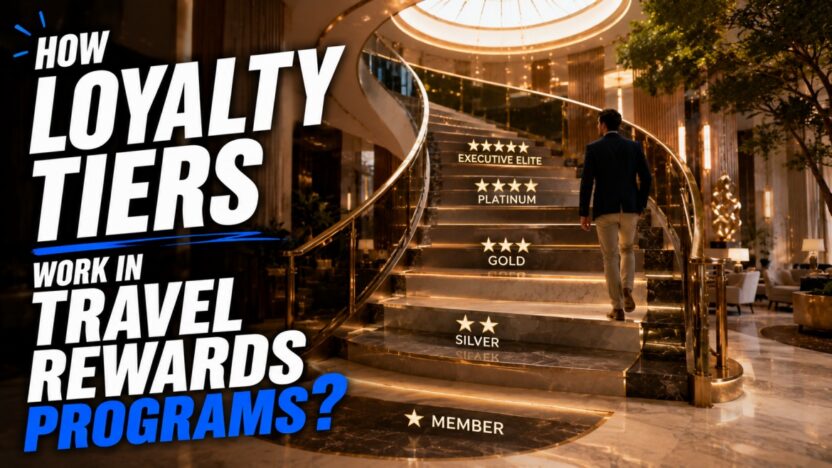
Most major programs use 3–5 tier levels, with each level requiring more activity than the last and unlocking proportionally more benefits.
How Airline Loyalty Tiers Work in 2026
The four major US airline programs — American AAdvantage, Delta SkyMiles, United MileagePlus, and Southwest Rapid Rewards — each use a different metric to determine tier qualification. Understanding the difference matters because it changes how you can earn status.
American AAdvantage: The Loyalty Points Model
American AAdvantage uses a single metric called Loyalty Points. You earn Loyalty Points from any qualifying AAdvantage activity — flying on American, paid travel partner activity, credit card spending, dining program participation, shopping portal purchases, hotel and car rental bookings through AAdvantage partners. Everything counts.
The 2026 thresholds for AAdvantage status:
- Gold: 40,000 Loyalty Points
- Platinum: 75,000 Loyalty Points
- Platinum Pro: 125,000 Loyalty Points
- Executive Platinum: 200,000 Loyalty Points
Status earned during the calendar year is valid through the end of the following March, giving you 12–15 months of benefits per qualification period.
What makes AAdvantage distinctive: the single-metric design rewards travelers who spread their qualifying activity across flying, card spending, and partner earning. There’s no minimum flight requirement. A traveler who never flies American but holds the AAdvantage Aviator Business Mastercard and spends heavily could theoretically reach Executive Platinum entirely through credit card activity.
Delta SkyMiles: The All-MQD Model
Delta moved to a fully revenue-based status program in 2024, dropping segment counts and Medallion Qualifying Miles entirely. Status now depends solely on Medallion Qualifying Dollars (MQDs) — essentially how much you spend with Delta.
The 2026 thresholds (unchanged from 2025) for Delta Medallion status:
- Silver Medallion: 5,000 MQDs
- Gold Medallion: 10,000 MQDs
- Platinum Medallion: 15,000 MQDs
- Diamond Medallion: 28,000 MQDs
You earn MQDs from Delta-marketed flights (1 MQD per $1 base fare), Delta SkyMiles American Express card spending (1 MQD per $10 on Reserve cards, 1 MQD per $20 on Platinum cards), and various partner activity. Diamond and Platinum cardholders also receive an annual MQD Headstart ($2,500 for the Reserve card).
What makes Delta distinctive: the pure-revenue model rewards travelers who spend heavily on Delta — whether by flying paid premium cabins, taking expensive last-minute fares, or running large amounts of card spending through Delta Amex. It penalizes frequent flyers who book the cheapest available fares.
United MileagePlus: The PQP + PQF Hybrid
United continues to use a hybrid model with two qualification metrics: Premier Qualifying Points (PQPs) for spending and Premier Qualifying Flights (PQFs) for segment count. You can qualify either by hitting both thresholds (PQFs + PQPs) or by hitting a higher PQP-only threshold.
The 2026 thresholds (unchanged from 2025) for United Premier status:
- Premier Silver: 15 PQFs + 5,000 PQPs (or 6,000 PQPs alone)
- Premier Gold: 30 PQFs + 10,000 PQPs (or 12,000 PQPs alone)
- Premier Platinum: 45 PQFs + 15,000 PQPs (or 18,000 PQPs alone)
- Premier 1K: 54 PQFs + 18,000 PQPs (or 24,000 PQPs alone)
- Global Services: Invitation-only top tier
United also requires a minimum of 4 United or United Express flights per year to qualify for any Premier tier — even if you earn all your PQPs from credit card spending.
What makes United distinctive: the dual-metric system rewards travelers who actually fly United, not just spend on United cards. It’s harder to qualify entirely through card spend than American or Delta, which makes United status more meaningful for actual flyers — but less accessible for high-spending non-flyers.
Southwest Rapid Rewards: The Simple Two-Tier Model
Southwest keeps things simple with just two elite tiers:
- A-List: 20 one-way qualifying flight segments OR 35,000 tier qualifying points
- A-List Preferred: 40 one-way qualifying flight segments OR 70,000 tier qualifying points
Tier qualifying points come from Southwest flights and Rapid Rewards credit card spending. Benefits include priority boarding, free same-day standby, and (for A-List Preferred) free in-flight Wi-Fi.
What Airline Status Actually Gets You
Status benefits vary by tier and by airline, but the broad pattern across US programs in 2026:
Entry-level tier (Silver, Gold) typically includes:
- Priority boarding (Group 1–3 instead of Group 6)
- 1–2 free checked bags
- Preferred seat selection
- Bonus miles/points on flights (25–75%)
- Alliance status (Star Alliance Silver/Gold, oneworld Ruby/Sapphire, SkyTeam Elite)
Mid-tier (Platinum, Platinum Pro, Platinum Medallion, Premier Platinum):
- All Silver/Gold benefits, plus
- Complimentary upgrades to first class (subject to availability)
- More free checked bags (3 typically)
- Priority security and check-in lanes
- Alliance status (oneworld Sapphire, Star Alliance Gold, SkyTeam Elite Plus)
- Lounge access on international flights (varies by program)
Top tier (Executive Platinum, Diamond, Premier 1K, A-List Preferred):
- All previous benefits, plus priority for upgrades over lower tiers
- Complimentary lounge access (sometimes domestic too)
- Free in-flight Wi-Fi (Delta and Southwest)
- Concierge or special-handling lines
- Highest-tier alliance status (oneworld Emerald, Star Alliance Gold, SkyTeam Elite Plus)
Beyond the public tiers, most airlines have an invitation-only top tier (Delta 360, American ConciergeKey, United Global Services) for the airline’s biggest spenders — typically anyone spending $100,000+ per year. Benefits include personal travel assistants, tarmac transfers in select cities, and other ultra-premium perks.
How Hotel Loyalty Tiers Work in 2026
Hotel programs differ from airlines in two key ways. First, most hotel programs use nights stayed as the primary qualification metric (a “night” being one paid room-night, regardless of cost). Second, hotel status delivers more consistent on-property benefits — room upgrades, free breakfast, late checkout — that are easier to verify on every stay.
The four major hotel loyalty programs each have a slightly different tier structure.
Marriott Bonvoy
Marriott’s 2026 tier structure (with January 2026 updates):
- Member: Free, default level
- Silver Elite: 10 qualifying nights
- Gold Elite: 25 qualifying nights
- Platinum Elite: 50 qualifying nights
- Titanium Elite: 75–80 qualifying nights (raised in 2026 update)
- Ambassador Elite: 100 qualifying nights + $23,000 annual spend
Platinum Elite is the sweet spot for most travelers — guaranteed late checkout, upgrades to “preferred rooms” (occasionally to suites), lounge access at most full-service properties, free breakfast at Marriott-branded properties. Titanium adds Suite Night Awards and stronger upgrade priority. Ambassador adds personal concierge service. Marriott is the largest hotel loyalty program in the world (8,000+ properties).
Hilton Honors
Hilton’s 2026 tier structure (with January 2026 updates that made spending-based qualification easier):
- Member: Free, default level
- Silver: 10 nights or 25,000 base points
- Gold: 40 nights or 75,000 base points
- Diamond: 60 nights or 120,000 base points
- Diamond Reserve: 80 nights + 40 stays + $18,000 spend
Hilton Gold is one of the easiest high-value statuses to obtain — included automatically with the Hilton Honors American Express Aspire card. Gold delivers free breakfast at most properties, free Wi-Fi, late checkout, and complimentary upgrades when available. Diamond adds executive lounge access. Hilton is widely considered the easiest top-tier hotel status to maintain because card-based access makes it accessible without staying.
World of Hyatt
Hyatt’s 2026 tier structure remains relatively stable:
- Member: Free, default level
- Discoverist: 10 nights or via select credit cards
- Explorist: 30 nights
- Globalist: 60 nights
- Lifetime Globalist: 1,000 lifetime nights
Globalist is widely considered the most valuable hotel elite status in the world. Benefits include guaranteed suite upgrades (when available), free breakfast at all properties, 4 PM late checkout, waived resort fees on award stays, and access to Hyatt’s higher-end brands (Park Hyatt, Andaz, Alila, Miraval). Hyatt has the smallest property network of the major chains (around 1,400 properties).
IHG One Rewards
IHG’s 2026 tier structure:
- Club: Free, default level
- Silver Elite: 10 nights
- Gold Elite: 20 nights
- Platinum Elite: 40 nights or 60,000 qualifying points
- Diamond Elite: 70 nights or 120,000 qualifying points
Platinum delivers complimentary upgrades, late checkout, reward night discounts, and access to the Milestone Rewards system (additional perks at 10, 20, 30, 40+ night thresholds). The IHG One Rewards Premier Credit Card includes Platinum Elite status as long as you hold the card — making it one of the cheapest paths to mid-tier hotel status.
What Hotel Status Actually Gets You
The most valuable hotel elite benefits, ranked by traveler-reported impact:
Free breakfast — Worth $30–$60 per person per day. Across an 8-night stay for two, this alone can deliver $480–$960 in value. Available at Marriott Platinum and above (full-service properties only), Hilton Gold and above (most properties), Hyatt Globalist (all properties), IHG Platinum at select brands.
Room upgrades — Worth $50–$300 per night depending on property class. Hyatt Globalist offers the most reliable suite upgrades. Marriott and Hilton offer upgrades but rarely to suite categories without Suite Night Awards.
Late checkout — Free 2 PM checkout is common; Hyatt Globalist offers guaranteed 4 PM. For travelers with afternoon or evening flights, this eliminates the need for day-use rooms.
Lounge access — Free breakfast, evening hors d’oeuvres, drinks. Available at Hilton Diamond, Hyatt Globalist, Marriott Platinum (at certain brands), IHG Platinum (through milestone rewards).
Waived resort fees — Particularly valuable in Vegas, Hawaii, and Caribbean destinations where resort fees can run $35–$75 per night. Hyatt Globalist waives these on award stays.
For luxury couples doing 8–10 nights per year at premium properties, mid-tier and top-tier hotel status can deliver $1,200–$2,500+ in verifiable annual perks — often enough to offset multiple credit card annual fees combined.
How to Earn Status Without Flying (or Staying) for It
One of the most impactful changes in travel loyalty over the past five years is the proliferation of credit card-based status earning. Several major credit cards now grant elite status outright (no flying or staying required), and several others let you earn status entirely through card spending.
Credit cards that include automatic elite status:
- The Platinum Card from American Express: Marriott Gold + Hilton Gold (enrollment required)
- Hilton Honors Aspire (Amex): Hilton Diamond (top-tier, included as a cardholder benefit)
- Marriott Bonvoy Brilliant (Amex): Marriott Platinum (top-tier benefits without nights)
- IHG One Rewards Premier (Chase): IHG Platinum Elite
- Atmos Rewards Summit Visa Infinite: Alaska Atmos Gold (with potential to qualify for Platinum/Titanium through card-based status points)
Credit cards that earn status credits through spending:
- AAdvantage Citi cards: Loyalty Points on every dollar
- Delta SkyMiles Amex cards: MQDs on every dollar
- United Chase cards: PQPs on every dollar (capped by card tier)
- Southwest Rapid Rewards Performance Business: tier qualifying points on spending
The 2026 status comparison via credit card spend (for top-tier qualification):
| Program | Spend Required for Top Tier |
|---|---|
| Hilton Diamond | ~$60,000–$72,000 (with Aspire card carrying it automatically) |
| Marriott Titanium | ~$87,000 with co-branded cards |
| Delta Diamond | $250,000–$300,000 effective spend (toughest top-tier via spend) |
| American Executive Platinum | $182,000 effective spend |
| United Premier 1K | $360,000+ across multiple cards (hardest of US airlines) |
Notice the gap: hotel programs are dramatically friendlier to spend-based status qualification than US airlines, especially for top-tier levels. For most travelers, hotel status is the more accessible path.
Status Matches and Challenges: A Shortcut
Most major hotel programs (and a few airlines) offer status matches or status challenges — programs that let you transfer elite status from one brand to another, sometimes by demonstrating existing status and sometimes by completing a short stay challenge.
Current 2026 status match patterns:
For travelers planning extensive travel during a specific period, status matches can stack benefits across multiple programs simultaneously.
Bottom Line: Pick a Strategy, Don’t Chase Every Tier
The biggest mistake travelers make with loyalty tiers is trying to qualify for status with too many programs simultaneously, splitting their spending and activity across so many brands that they fail to reach meaningful tier benefits anywhere.
The smarter approach in 2026 is to pick one airline and one hotel chain as your primary loyalty targets, structure your travel and credit card spending to consistently earn those statuses, and let everything else fall where it falls. This concentration delivers mid-tier or top-tier benefits where you’ll actually use them.
For most US-based travelers, the highest-value combination in 2026 is:
- One airline elite status (American AAdvantage if you want oneworld and partner access; Delta SkyMiles if you live in the Atlanta/Northeast region and value reliability; United MileagePlus if you fly internationally on Star Alliance carriers; Alaska Atmos if you’re West Coast-based)
- One hotel elite status earned primarily through credit card spending (Hilton Gold or Diamond via Aspire card; IHG Platinum via Premier card; Marriott Platinum via Brilliant card)
- Credit card lounge access (Amex Platinum, Chase Sapphire Reserve, or Capital One Venture X) to cover everything else
With this stack, you get reliable mid-to-top-tier benefits on the brands you use most, plus lounge access globally, without burning out trying to qualify for status with every program in the industry.
FAQs
Q: What’s the difference between airline loyalty tiers and credit card loyalty tiers?
A: Airline loyalty tiers (American AAdvantage, Delta SkyMiles, United MileagePlus, etc.) are earned through flying and qualifying activity — they trigger benefits when you actually travel. Credit card loyalty tiers (Chase Sapphire Reserve, Amex Platinum) are separate: they grant benefits like lounge access, statement credits, and sometimes automatic hotel/airline status as a cardholder benefit, not from qualifying activity.
Q: How long does airline elite status last?
A: Status earned during a calendar year typically lasts through the end of January or March of the following year. AAdvantage status earned in 2025 runs through March 31, 2026. Delta and United status earned in 2025 runs through January 31, 2027.
Q: Which is easier to earn — airline status or hotel status?
A: Hotel status is generally significantly easier, both through nights stayed and through credit card spending. Hilton Diamond is achievable with the Hilton Aspire card alone (no nights required), and IHG Platinum is automatic with the IHG Premier card. Compare to United Premier 1K, which requires $360,000+ in card spending across multiple cards plus 4 paid United flights per year.
Q: Is airline elite status worth pursuing in 2026?
A: It depends on travel frequency. If you fly 10+ times per year on the same airline, mid-tier status usually pays for itself in bag fees, upgrades, and priority. Top-tier status pays off mainly for travelers flying 25+ times per year on the same carrier. For occasional flyers, credit card lounge benefits and bag fee waivers usually cover the gaps.
Q: Which is the most valuable hotel elite status?
A: World of Hyatt Globalist is widely considered the most valuable hotel status in 2026 — guaranteed suite upgrades, free breakfast at all properties, 4 PM late checkout, waived resort fees on award stays. The trade-off: Hyatt has the smallest property network among major chains.
Q: Can I have status with multiple airlines or hotels at the same time?
A: Yes, and many serious travelers do. Status with two airlines across opposite alliances (oneworld and SkyTeam, for instance) gives you priority benefits across most routes. The same applies to hotels: holding mid-tier status with Marriott, Hilton, and IHG simultaneously through credit card spending grants flexibility based on what’s available in any given destination.
Q: How do alliance benefits work across airlines?
A: When you hold elite status with one airline in a global alliance (Star Alliance, oneworld, SkyTeam), you receive certain benefits when flying any partner airline. Star Alliance Gold (United Premier Gold and above) grants lounge access, priority boarding, and free bags on Lufthansa, Air Canada, Singapore Airlines, and 20+ other partners.