Table of Contents
The Introduction
Buying airline miles can help you book an expensive flight for less, but promotional bonuses do not automatically make a purchase worthwhile. If you pay more to acquire miles than they save you on a ticket, the deal could cost you money instead.
The key is comparing the cost of buying airline miles with their value for a specific redemption. A mileage purchase that works for an international Business Class award might be a poor deal for a short domestic flight.
Before buying, check award availability, compare the cash fare, and account for taxes and fees. Flightpoints helps travelers search award flights across multiple loyalty programs and compare mileage requirements before deciding how to book.
In this guide, we explain whether buying miles is worth it, how to calculate break-even prices, and when purchasing miles makes financial sense.
The Key Takeaways
- Buying miles is usually worthwhile only when you have a specific redemption in mind.
- Calculate your effective purchase cost per mile, including promotional bonuses, taxes, and fees.
- Compare that cost with the realistic value of the award, not an advertised valuation.
- Buying a small number of miles to complete a confirmed award can make sense.
- Check partner programs and transferable credit card points before paying for miles.
Is Buying Miles Worth It?
Buying airline miles can be worth it when the total cost of purchasing and redeeming them is lower than the price of a comparable cash ticket. However, the outcome depends on the loyalty program, redemption, fees, and purchase promotion.
Airlines often sell miles at prices that make ordinary purchases unattractive. Promotional bonuses can lower the effective cost, but the resulting price still needs to beat the value you can realistically receive.
Consider two scenarios:
- Potentially worthwhile: You find a confirmed award flight that costs $1,200 in cash or 50,000 miles plus $100 in taxes. Buying the required miles for less than the net savings could be a good deal.
- Usually not worthwhile: You buy miles during a promotion without knowing how you will use them. If award prices rise or seats disappear, you could be left holding miles you do not need.
The best approach is to find the flight first and buy miles only after checking the numbers.
How to Calculate the Cost of Buying Airline Miles
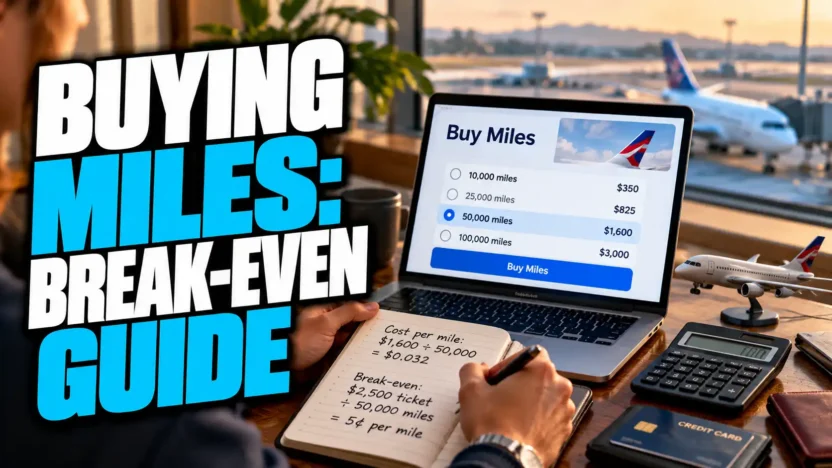
The advertised bonus percentage can make a purchase look cheaper than it really is. Instead, calculate the effective cost per mile after accounting for all purchased and bonus miles.
Effective cost per mile formula: Effective cost per mile = Total purchase cost ÷ Total miles received
| Purchase details | Example |
|---|---|
| Base miles purchased | 40,000 |
| Promotional bonus | 20,000 |
| Total miles received | 60,000 |
| Total purchase cost | $1,000 |
| Effective cost per mile | 1.67¢ |
Include applicable taxes, transaction charges, and foreign transaction fees in the total cost. A bonus is useful only if it reduces your effective purchase price enough to make the redemption competitive.
How to Calculate Airline Miles Value
Your airline miles value depends on the cash price of the flight you would otherwise book, the number of miles required, and any additional award fees.
Use this formula to calculate cents per mile (CPM):
Airline miles value = (Comparable cash fare − Award taxes and fees) ÷ Miles required × 100
For example, imagine a flight costs $900 in cash or 50,000 miles plus $100 in taxes and fees.
- Comparable cash fare: $900
- Award taxes and fees: $100
- Miles required: 50,000
- Net value: $800
Your redemption value is 1.6 cents per mile.
How to Calculate Your Break-Even Price
The break-even point is the maximum effective price you should pay per mile before purchasing miles becomes more expensive than the value you expect to receive.
For a simple comparison:
Break-even purchase cost per mile = Net redemption value per mile
If your redemption offers 1.6 cents per mile, paying less than 1.6 cents per mile can make sense before considering other costs and benefits. Paying more generally makes the cash ticket more attractive.
Here is how different purchase prices compare with a redemption worth 1.6 cents per mile.
| Effective purchase cost | Redemption value | Difference per mile |
|---|---|---|
| 1.0¢ | 1.6¢ | +0.6¢ |
| 1.3¢ | 1.6¢ | +0.3¢ |
| 1.6¢ | 1.6¢ | Break-even |
| 1.9¢ | 1.6¢ | −0.3¢ |
These figures show the difference between redemption value and purchase cost, not guaranteed savings. Award fees, credit card rewards, flexibility, and the value of miles you would have earned on a cash ticket can affect the final comparison.
When Is Buying Airline Miles Worth It?
1. You have found a bookable award flight
This is the strongest reason to buy miles. Confirm the itinerary, mileage requirement, taxes, and fees before purchasing. Since award inventory can change quickly, complete the booking promptly once the miles arrive.
2. You only need a small mileage top-up
Suppose you have 47,000 miles but need 50,000 for an award. Buying the missing 3,000 miles may be more practical than abandoning the redemption, provided the total cost compares favorably with the cash fare.
3. A promotion lowers the purchase price sufficiently
A large bonus does not automatically mean good value. Calculate the effective cost per mile and compare it with your expected redemption value before paying.
When Buying Miles Is Usually a Bad Idea
Avoid buying miles simply because a promotion is ending or because you hope to use them someday. Loyalty programs can change award prices, and the flight you want may not have award seats available when you are ready to travel.
Also compare the cash fare with the award’s additional charges. High carrier-imposed surcharges can reduce the value of a redemption substantially.
Before purchasing, check whether transferable credit card points could cover the award instead. Transferring existing points may avoid an unnecessary cash expense, although transfer ratios and availability vary by program.
How Flightpoints Helps You Compare Mileage Purchases
Flightpoints helps travelers discover award flights across multiple airline loyalty programs, compare mileage requirements, and evaluate available options. Its tools can help you assess whether a potential redemption justifies buying miles.
Use the platform to:
- Compare award options: Search different programs to see whether another airline offers the same journey for fewer miles.
- Evaluate points versus cash: Use the Points Value Calculator and miles-or-cash comparison tools to assess redemption value.
- Explore flexible dates: Check alternative dates and routes where mileage requirements or availability may be more favorable.
- Track award availability: Use alerts to monitor routes for award seats, then verify the itinerary before purchasing miles.
Flightpoints supports your research, but availability and pricing can change. Always confirm the final award details with the airline before making a non-refundable mileage purchase.
The Bottom Line
So, is buying miles worth it? Sometimes, but the numbers need to work for your specific trip.
Calculate your effective purchase cost, subtract award taxes and fees from the comparable cash fare, and determine the value of each mile. Buying miles can make sense for a confirmed award or a small top-up, especially when a promotion lowers the cost sufficiently.
If you do not have a clear redemption plan, keeping your money is usually the safer choice. Find the flight first, compare your options, and buy miles only when the savings justify the expense.
Discover the True Value of Your Points
Ready to see what your points are really worth? Get Flightpoints Pro and find the cheapest award seat across every program in seconds.
Get Flightpoints ProFAQs
Q. Is buying airline miles worth it?
A: It can be worthwhile when the effective cost of buying miles is lower than their value for a specific, available award flight. Always compare the full cost with a comparable cash ticket.
Q. How much should I pay for airline miles?
A: There is no universal ideal price. Your maximum should depend on the redemption value you can realistically achieve, adjusted for taxes, fees, and any rewards you forgo by not paying cash.
Q. Does buying miles during a bonus promotion save money?
A: Not necessarily. Calculate the effective cost per mile after adding bonus miles and accounting for all charges. Then compare that cost with your intended redemption value.
Q. Is it better to buy miles or pay cash for a flight?
A: Compare the cash fare with the cost of purchasing the required miles plus award taxes and fees. Also consider the miles and credit card rewards you might earn on a paid ticket.
Q. Should I buy airline miles without a planned trip?
A: Generally, no. Without a specific redemption, you risk paying for miles that become less useful if award prices change or suitable seats are unavailable.